
What Plinko actually is
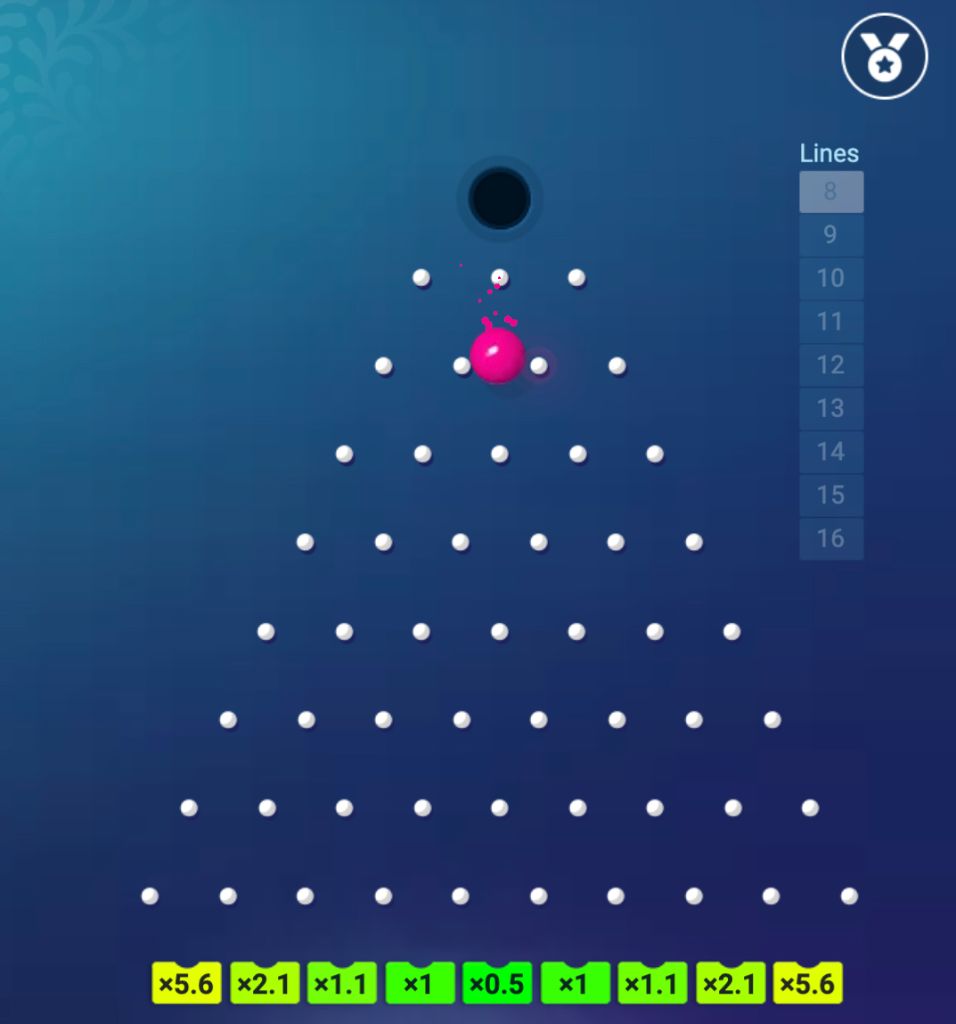
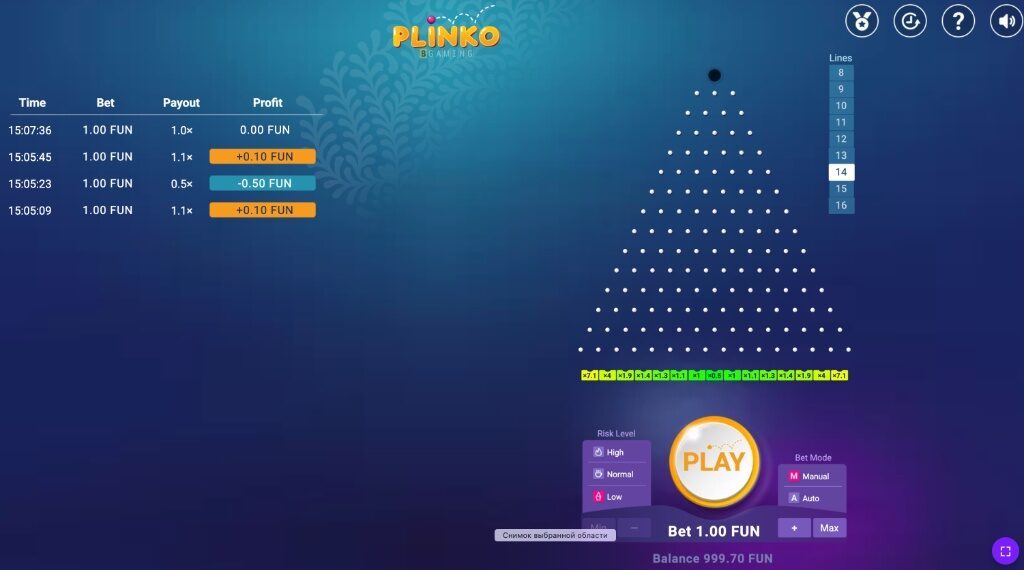
If you ever watched one of those prize-drop segments on the telly, you already know Plinko. A small ball is let go at the top of a triangular wall of pins. On the way down it clips a pin, jumps sideways, clips the next one, and carries on zig-zagging until it falls off the bottom row into one of the slots waiting there. Each slot has a number on it, which is your multiplier. Whichever slot catches the ball decides what you get paid.
That is really all there is to it. No reels to wait on, no paylines to work out. The simplicity is why it sits so happily on a phone. A round is done in a couple of seconds. Before each one you make just two calls: how tall to build the pin wall, and how spicy you want the payouts.
The first call is the number of lines, anywhere from eight rows up to sixteen. The second is the risk level, which comes as Low, Normal or High. Turn both up and the slots out at the far left and right edges start carrying huge multipliers. The catch is that the ball has to drift a long way sideways to reach them, and it rarely does. Keep the wall short and the risk low and the numbers bunch together, so wins are smaller but they land a lot more often.
The result rests entirely on the path the ball takes, so no two rounds are connected. Nothing is ever “due”, and there is no meter quietly filling toward a jackpot. You drop, you see the number, and you decide whether to have another go. That loop is what keeps people in their seat.
Why it caught on with Aussie players
Plinko did not turn up with a big marketing push behind it. It crept up the lists in Australian online casinos because it does a few unfashionable things well, and players noticed.
For a start, it is honest about the odds. Before you commit a cent you can read every slot along the bottom, so you already know the best and the worst a round can do. A lot of slot games bury that behind animation and bonus rounds. Plinko just shows you the ladder and lets you climb it. Then there is the pace. A drop takes seconds, which suits how most of us actually play now: a few rounds on the train, a couple while the kettle boils, then done.

The control matters too. The same game can be a gentle, low-stakes trickle of small wins, or a tense chase for the edges, and you switch between the two with a single tap. That alone stops it going stale. A bored player changes the lines and risk and it feels like a different game again.
It is also fair in a way you can actually check. Plinko runs on provably-fair maths, using a server seed plus a client seed you are allowed to change, so the outcome is locked in before the ball moves and can be verified after. For a game of pure chance, being able to prove that nobody nudged the result counts for a lot. It runs in any browser with no install either, so it is easy to start and hard to put down.
It wins people over with honesty and pace, not flashy promises.
Playing the free demo
The smartest thing you can do before risking a dollar is spend twenty minutes in the demo. It is the exact same game. Same board, same controls, same multipliers. The only difference is that the credits are play money. There is no deposit to make, no email to hand over and no card. You open it and a fun balance is already sitting there waiting.
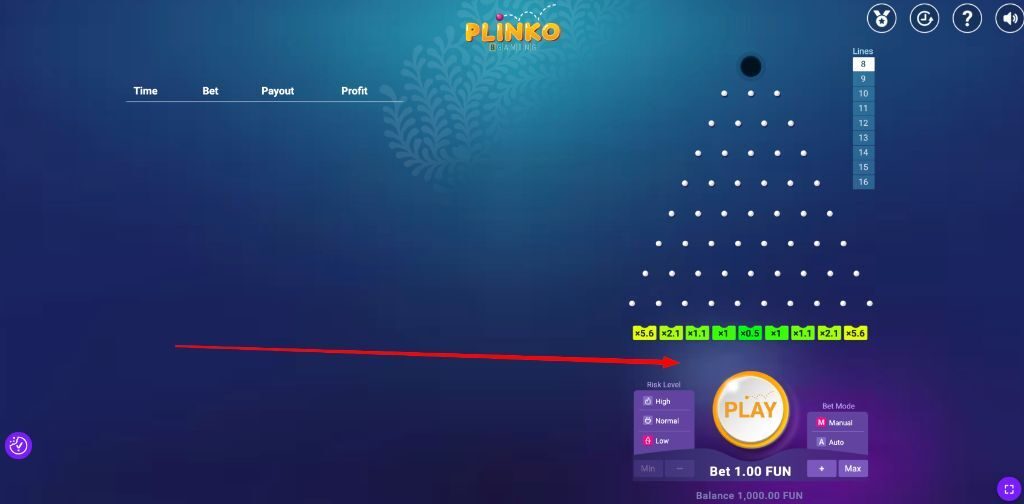
A preview of the demo screen. The playable game is not embedded here. Open it at a casino to drop the ball yourself.
Use the demo to get a feel for how the two settings change things. Drop a dozen balls on eight lines at Low risk and most of them will settle near the middle for small, steady results. Switch to sixteen lines on High and that same dozen behaves very differently. Most still land centrally and pay under your stake, but now and then one wanders out toward an edge and the number jumps.
It is also the only risk-free way to test a staking idea. Maybe you want to see what flat-betting feels like over fifty rounds, or how quickly a play balance drains when you chase the edges. Try it here, where it costs nothing and none of it follows you to a real account. Once the game stops surprising you, and you can roughly predict how a setting will behave, that is a fair sign you are ready to decide: keep it as a free bit of fun, or move up to real stakes.
Playing Plinko for real money
Moving from the demo to real money is not complicated. What matters is picking a casino that genuinely carries Plinko, welcomes Australian players and pays out without fuss. Two names keep coming up when Aussie players talk about it: Mostbet and Pin-Up Casino. Both run a licensed Plinko table, both take AUD and crypto, and both have a reputation for clean withdrawals.
The process is short. Create an account and verify it. Keep your ID handy, because a quick check now saves a lot of grief at cash-out time. Make a first deposit by card, e-wallet or crypto. If you already hold coins, that route is usually the quickest and cheapest. After that you open Plinko, keep your stake sensible against your balance, set your lines and risk, and drop for real.

Pin-Up Casino
Bright and beginner-friendly, with Plinko listed right up front. Supports AUD and crypto and is a regular pick among Australian players.
Mostbet
A well-known sportsbook-and-casino brand with a smooth Plinko table, fast crypto payouts and apps for Android and iOS.
Paying and cashing out with crypto
More and more of the casinos open to Australians now treat cryptocurrency as a proper payment method rather than a bolt-on. If you already hold coins, it is often the fastest way in and out of the game.
Bitcoin and Ethereum are accepted almost everywhere. Stablecoins like Tether (USDT) are popular for a simple, practical reason: their value barely moves against the dollar, so your balance behaves predictably. Litecoin and a few others show up regularly as well. What you gain is speed and privacy. Deposits usually land within minutes, withdrawals tend to clear faster than card pay-outs, fees are modest, and your bank details never touch the casino.
There is one honest caveat. Exchange rates wander. The dollar value of a crypto balance can shift a little between the moment you deposit and the moment you cash out, so keep half an eye on the rate if you are holding a volatile coin rather than a stablecoin.
How to play, step by step
Here is the whole run, from the moment the table loads to the second the ball settles. None of it is fiddly, but knowing what each control does means you are not guessing once real money is on the line.
- Set your betNudge the stake with minus and plus, or jump to the edges with Min and Max. Hit the ceiling and the plus and Max buttons grey out; hit the floor and minus and Min do the same, so you always know where you stand.
- Choose the risk levelLow keeps payouts tight and the swings gentle. High pushes the outer slots to their biggest numbers but makes the middle stingier. This one choice changes the feel of the game more than anything else.
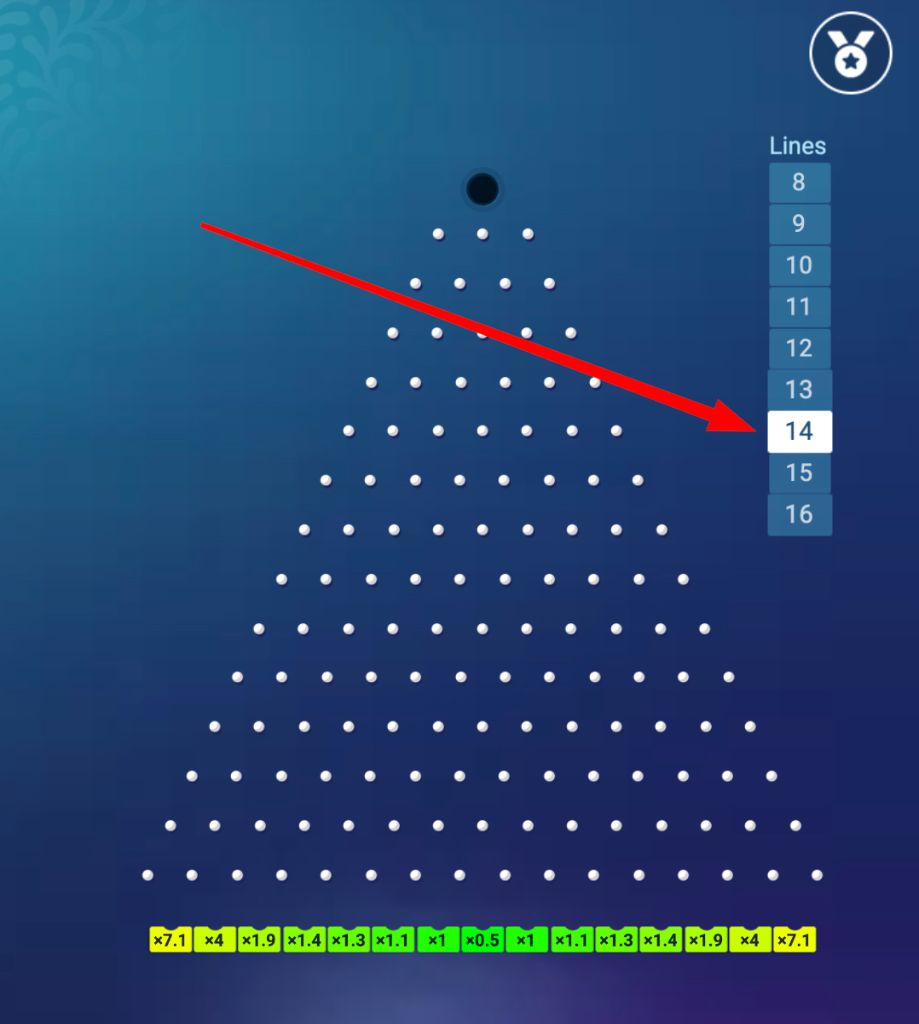
- Pick the number of linesSlide between 8 and 16 rows. More rows means more slots and a higher possible top multiplier, though the ball also has further to travel to reach the edges.
- Choose Manual or AutoManual drops one ball per tap, so you stay in charge of every round. Auto sends a stream of balls on the same settings for hands-off sessions. The betting buttons lock while a round is live, but you can still flip the mode.
- Drop the ballPress Play. The ball leaves the top of the pyramid, rattles left and right off the pins, and where it lands sets your multiplier.
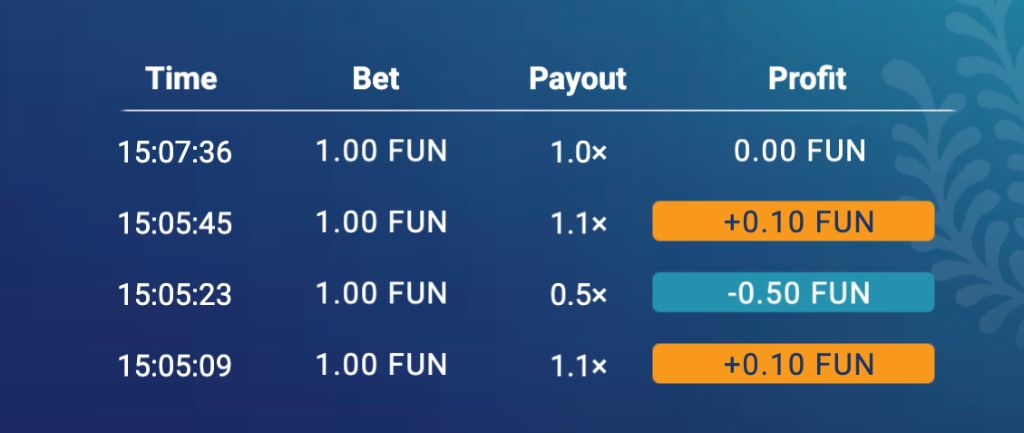
- Collect and reviewThe slot value times your stake lands in your balance straight away, and the round is logged in the history panel with its time, bet, payout and profit. Then you are free to go again.
What is the maximum multiplier?
This is the number everyone asks about first, so here it is plainly. On High risk with the full sixteen lines, the top slots can reach as high as x1000. To land one, the ball has to drift all the way out to a far edge. That path is rare, which is exactly why a tiny stake can now and then come back as a startling amount.
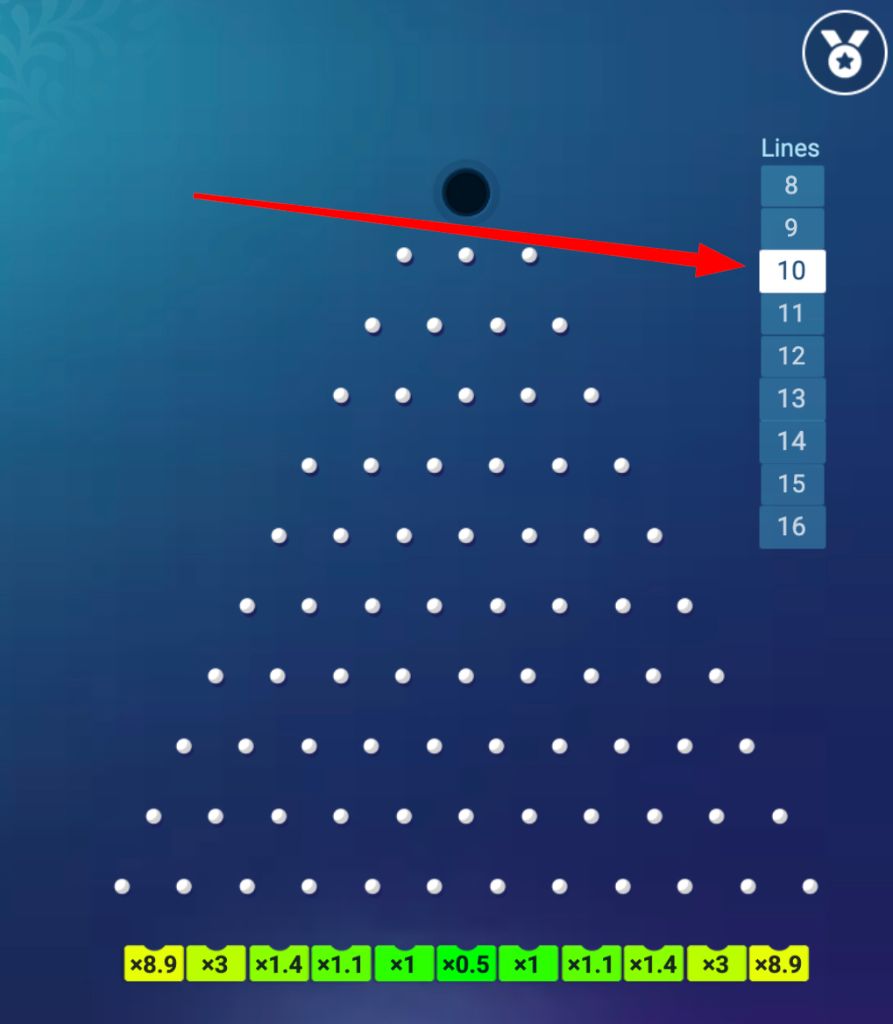
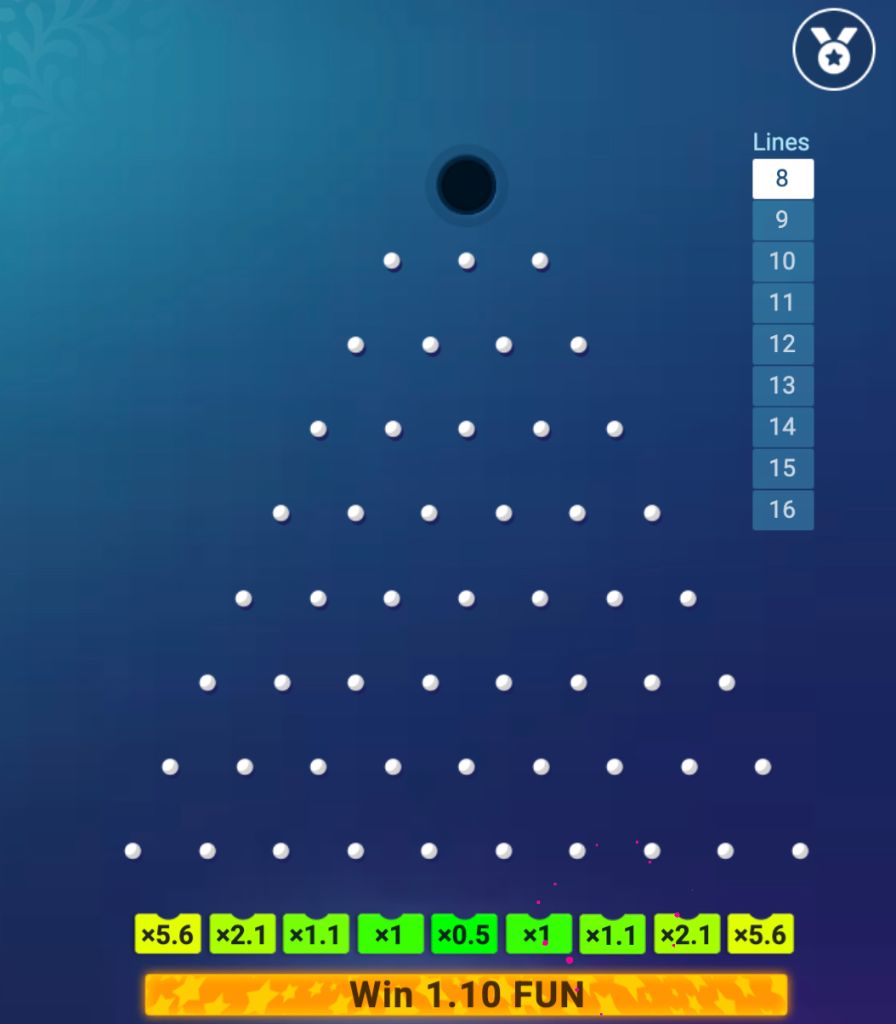
Trim the wall down and the ceiling drops with it. A short eight-line board has outer slots around x5.6. Ten lines pushes that toward x8.9, and from there it climbs into the tens, then the hundreds, then the x1000 corner case as you add rows and turn the risk up. The middle slots barely move through any of this. They hover around x0.5 to x1 whatever you do. That gap between the calm centre and the wild edges is the trade-off the whole game is built around.
It is worth reading those numbers before you commit, because a big ceiling is never free. The same High-risk, sixteen-line board that dangles x1000 also hands out the most sub-stake results in the middle. If you would rather see the ball pay something more often, a shorter board at Low or Normal keeps the swings smaller and the wins steadier.
| Lines | Centre | Edges (Normal) | Top edge (High) |
|---|---|---|---|
| 8 lines | x0.5 – x1 | x2.1 – x5.6 | up to x29 |
| 10 lines | x0.5 – x1 | x3 – x8.9 | up to x76 |
| 12 lines | x0.5 – x1 | x4 – x10 | up to x170 |
| 14 lines | x0.5 – x1 | x4 – x7.1 | up to x420 |
| 16 lines | x0.5 – x1 | x9 – x16 | up to x1000 |
Can you actually profit from Plinko?
We will be straight with you. Plinko is a game of chance, and like every casino game it carries a house edge. No pattern, system or “hot streak” will shift the odds of where a ball lands. Even so, plenty of players rate it as one of the more rewarding titles to sit with, and there is a reason for that.
You hold the dials. Because you can see every payout before you bet and choose your own volatility, you control how much risk rides on each drop. A patient player on a short, low-risk board gets a steady drip of small returns that keeps a balance ticking over for ages. A bolder one accepts long quiet stretches in exchange for the chance of an edge-slot hit.
The real value sits in bankroll discipline. Set a budget, keep each stake to a small slice of it, and a modest amount can run a long time. That, in turn, gives more rolls of the dice for a big result to turn up. Add the provably-fair system on top and you get a game that feels square and stays in your hands. The profit, when it comes, is luck. The discipline that keeps you in long enough to catch it is down to you.
What players told us
We asked a handful of regular players around the country what keeps them coming back. The same few themes kept turning up, which tells you a bit about the game.
“Started in the demo just to muck about and ended up hooked on the twelve-line board. Love that I can see exactly what each slot pays before I let the ball go.”
— Liam, Brisbane“Moved to crypto deposits and the cash-outs are quick. High risk is a wild ride. Most rounds are quiet, then one ball drifts to the edge and it’s all worth it.”
— Chloe, Perth“Perfect for a quick play on the train. A round takes seconds and I never lose track of my budget because the history panel keeps it all in front of me.”
— Noah, MelbourneOur own take lines up with theirs. Treat Plinko as entertainment, keep your bankroll in check, and it is one of the most enjoyable casual casino games going. Go in expecting guaranteed money and you will be disappointed, but that is true of every game in the building.
See a round play out
Reading about a falling ball only gets you so far. Here is a real round, recorded straight from the game: the drop, the rattle through the pins, and the slot that finally catches it. It is the quickest way to get the rhythm of the thing before you try the demo yourself.
Quick answers
- Is the Plinko demo really free in Australia?
- Yes. It runs on play credits with no deposit and no registration, so you can try every risk level and line count for as long as you like before deciding whether to play for real.
- What is the maximum multiplier?
- On High risk with 16 lines the top slots can reach around x1000. Shorter boards cap a lot lower, at roughly x5.6 on eight lines and about x8.9 on ten.
- Where can I play for real money?
- Licensed, crypto-friendly casinos such as Mostbet and Pin-Up Casino carry Plinko, welcome Australian players and handle AUD as well as cryptocurrency.
- Is Plinko fair?
- It uses provably-fair maths with a server seed and a client seed you can change. The result is fixed before the ball moves and can be checked afterwards, so it cannot be altered behind the scenes.
- Can I pay with cryptocurrency?
- Plenty of Plinko casinos open to Aussies take Bitcoin, Ethereum, Litecoin and stablecoins like USDT for both deposits and withdrawals, often faster and cheaper than cards.
- Do I need to download an app?
- No. Plinko runs in any mobile or desktop browser. Some casinos offer an Android or iOS app as well, but it is entirely optional.
- How many lines should a beginner pick?
- Eight to ten lines at Low or Normal risk is a gentle start. The payouts sit closer together, so the swings are smaller while you learn how the ball behaves.
- Is there a strategy that guarantees a win?
- No. Each drop is independent and random, so nothing changes the odds. The one genuinely useful habit is bankroll discipline: set a budget, keep stakes small and bank any win.
Our Plinko desk keeps this guide current. Last checked and updated on 24 June 2026. Multipliers can vary a little from one casino to the next, so always read the in-game payout strip before you stake real money.